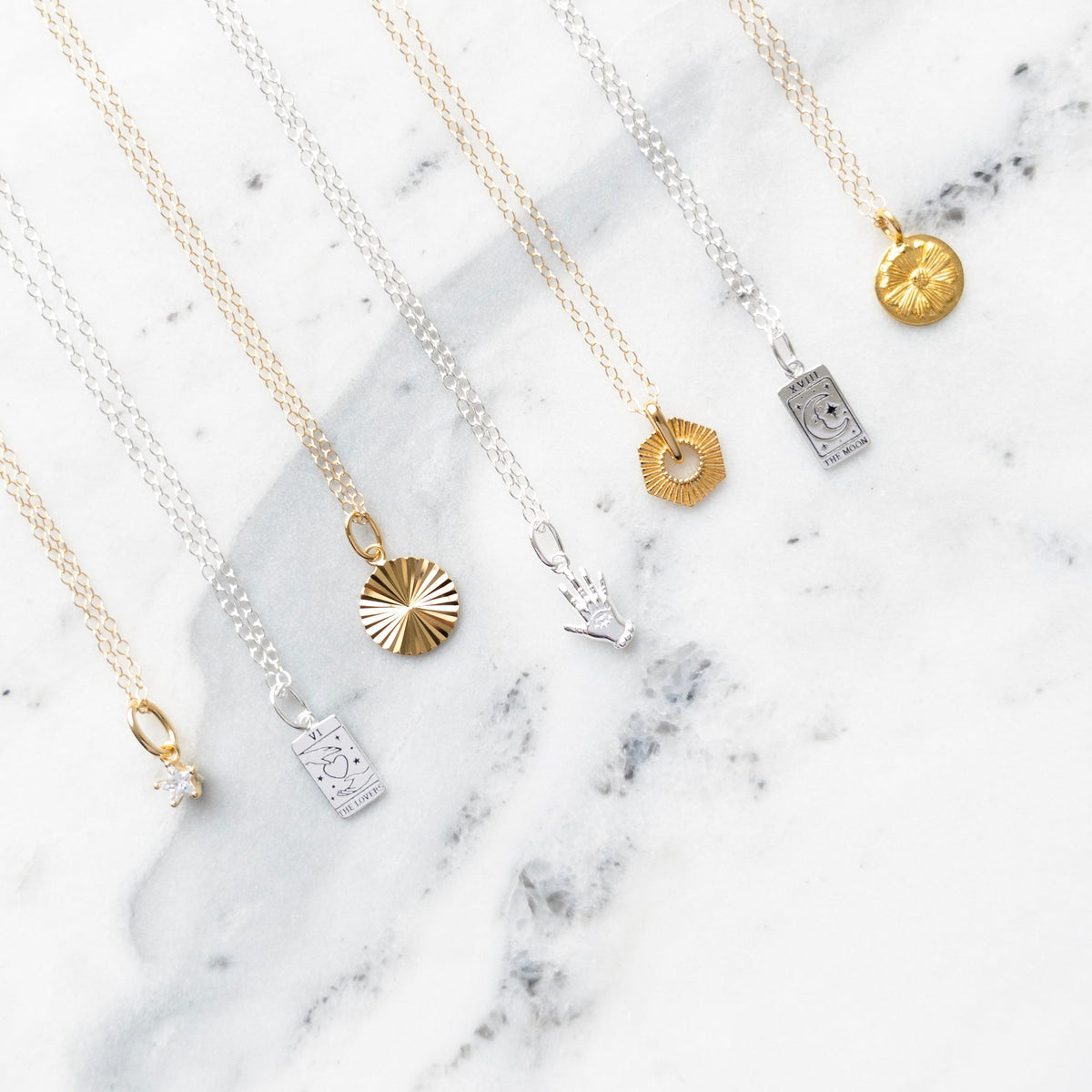




Gold jewellery is lovely. The warm colour, the versatility, the way it makes even a simple outfit look amazing. What's not to love?
Well, there's one thing: the price. Solid gold is eye-wateringly expensive, and not everyone wants to spend a small fortune on a necklace.
If you've been shopping for gold jewellery, you've probably come across terms like gold-filled, gold vermeil, and gold-plated. They sound similar, but there's quite a difference between them. It all comes down to how the gold is attached, what's underneath, and how well it stands up to being worn day after day.
Gold-filled jewellery is our favourite. It has a substantial layer of genuine gold bonded to the metal underneath, making it a much more durable option than conventional thin gold plating, without the solid-gold price tag.
But what does gold-filled actually mean? Is it real gold? Will it tarnish? Can you wear it in the shower? And is it worth spending a little more on?
We've got quite a bit to cover, so let's get stuck in. No jewellery industry degree required.
What is gold-filled jewellery?
Gold-filled jewellery is made by mechanically bonding a substantial layer of genuine gold to a core metal, rather than applying a thin coating through electroplating. The result is jewellery with a much thicker gold exterior than conventional gold-plated jewellery, making it more resistant to everyday wear.
That thicker gold layer is what makes gold-fill such a good alternative to solid gold. It has the appearance of genuine gold, but costs considerably less because the entire piece isn't made from gold.
It's not solid gold, of course, but it's a long way from a gold-coloured finish. There's a meaningful amount of real gold in the mix.
You might see gold-filled written as gold-fill, or come across related terms such as rolled gold, gold overlay, and bonded gold. They all describe jewellery with a layer of gold attached to another metal, but the terminology, construction, and applicable standards can vary.
At Oh My Clumsy Heart, our gold-fill jewellery has a mechanically bonded layer of 14k gold over sterling silver. That's genuine 14k gold on the outside, with sterling silver underneath. No brass, no mystery base metals.
It's a combination that gives you the warm look of gold jewellery, without the solid-gold price tag. And we're rather fond of it.

How is gold-filled jewellery made?
Gold-filled jewellery isn't made by giving a piece of metal a quick gold-coloured makeover. The gold is physically bonded to the metal underneath using a combination of heat and pressure. The bonded material can then be rolled, shaped, cut, and formed into jewellery components.
The important part is that the gold becomes bonded to the underlying metal, rather than simply sitting on the surface as a thin electroplated coating. There's considerably more gold in that outer layer than in conventional gold plating, which helps the jewellery withstand everyday wear.
Is gold-filled jewellery real gold?
Yes! Gold-filled jewellery contains genuine gold.
The gold forms the outer layer of the piece, while another metal makes up the core. That's the big difference between gold-filled and solid gold: one has a layer of gold, the other is gold all the way through.
There's another detail worth knowing when comparing gold jewellery: not all gold is the same purity.
Gold is usually mixed with other metals to make it harder and more practical for everyday wear. This mixture is called an alloy. The amount of pure gold in it is measured in carats:
- 9ct gold: 37.5% pure gold
- 14ct gold: 58.5% pure gold
- 18ct gold: 75% pure gold
- 22ct gold: 91.7% pure gold
- 24ct gold: 99.9% pure gold
The higher the carat, the more pure gold the alloy contains. Simple enough.
Gold-filled jewellery can be made using different gold alloys, so it's worth checking the carat when comparing pieces. Our gold-fill uses 14k gold, which contains 58.5% pure gold.
Here's a detail that's easy to miss: the carat tells you about the purity of the gold layer, not how much gold there is in the entire piece. Those are two different things, and it's worth keeping them separate when shopping for gold-filled jewellery.
Gold-filled vs gold-plated jewellery: what's the difference?
Gold-filled and gold-plated jewellery have something in common: both use a layer of genuine gold over another metal. The difference is how that gold gets there, and just how much of it there is.
What is gold-plated jewellery?
Gold-plated jewellery is made by applying a layer of gold to another metal, usually through a process called electroplating.
An electrical current is used to deposit gold onto the surface of the jewellery, giving it a golden finish. The metal underneath is known as the base metal or substrate. It could be brass, copper, zinc alloy, stainless steel, or even sterling silver.
Because the gold coating is usually much thinner than the layer used in gold-filled jewellery, it can wear away with regular use, eventually exposing the metal underneath. How quickly that happens depends on the thickness of the plating, the materials used, and how the jewellery is worn and cared for.
Gold-filled jewellery has a considerably thicker layer of gold, mechanically bonded to the metal underneath. It's generally much more resistant to everyday wear than conventional thin gold plating.
Gold-filled vs gold-plated: at a glance
| FEATURE | GOLD-FILLED | GOLD-PLATED |
| Outer layer | Genuine gold | Genuine gold |
| Application | Mechanical bonding | Electroplating |
| Gold layer | Substantial | Much thinner |
| Durability | Longer-lasting | Poor |
| Resistance to wear | High | Low |
| Price | Affordable | Often low |
| Solid gold? | No | No |
If you're buying jewellery you intend to wear regularly, it's worth looking beyond the golden finish. Two necklaces might look almost identical, but their construction can make a big difference to how they hold up over time.
What metals are used underneath gold plating?
The base metal is doing a lot of the work, even if you never get to see it. Gold plating can be applied to all sorts of metals, and the choice affects the price, durability, and properties of the finished piece. Here's what you might find underneath that golden exterior:
- Brass: An alloy of copper and zinc, commonly used in fashion jewellery. It can discolour when exposed to moisture and may cause skin discolouration.
- Copper: A relatively inexpensive metal that can oxidise and react with moisture and skin chemistry.
- Zinc alloy: Often used in costume jewellery because it's inexpensive and easy to manufacture.
- Stainless steel: A durable metal with good corrosion resistance, although its exact composition varies.
- Sterling silver: A precious-metal alloy containing 92.5% silver. It can tarnish when exposed to air and certain chemicals.
This is why two pieces of gold-plated jewellery can behave quite differently, even when they look almost identical. The finish might be similar, but the metal underneath can be a completely different story.
At OMCH, we use sterling silver as the foundation for our gold-fill jewellery. No brass cores, no mystery metals, and no cheap base-metal foundations. Just a precious-metal base beneath that genuine gold layer.

What is gold vermeil?
Gold vermeil (pronounced ver-may) is gold-plated sterling silver.
The important distinction is the metal underneath: vermeil uses sterling silver rather than brass, copper, or another base metal. That precious-metal foundation makes it a more premium option than many types of standard gold plating.
The gold is still applied through electroplating, though, so don't confuse vermeil with gold-fill. The manufacturing process is different, and so is the way the gold layer is attached. Because it's still plating, the gold can gradually wear away with regular use.
One advantage of the sterling silver underneath is that the jewellery may be suitable for re-plating if the gold finish wears away. Whether that's possible depends on the construction and condition of the piece.
What is the difference between gold-filled and gold vermeil?
Both use genuine gold over sterling silver, but they get there in different ways:
- Gold-filled: A substantial layer of gold is mechanically bonded to the underlying metal.
- Gold vermeil: Gold is electroplated onto sterling silver.
Neither is solid gold, but both offer a way to wear genuine gold without paying solid-gold prices.
The main difference is the construction. Gold-fill uses a much more substantial bonded layer, while vermeil relies on electroplating. If you're comparing the two, it's worth looking at the gold content and thickness, rather than assuming they offer the same durability.
What is eco gold plating?
Eco-plating is a term you might come across when shopping for jewellery, particularly from brands keen to highlight their environmental credentials.
It sounds promising, but there's a catch: it's not a universally recognised jewellery standard in the same way as gold-fill and vermeil. The term doesn't tell you how thick the gold layer is, what metal sits underneath, or exactly how the jewellery is made.
Generally, eco gold plating refers to gold plating marketed as a more environmentally considerate alternative to conventional processes. That might involve recycled gold, changes to plating chemistry, or manufacturing methods intended to reduce environmental impact.
But the label alone doesn't answer some fairly important questions:
- How thick is the gold coating?
- What metal is underneath?
- Is recycled gold being used?
- How durable is the finish?
- What exactly makes the process better for the environment?
There's also the possibility of greenwashing. Calling something eco-friendly doesn't automatically make it so. We'd rather see specific information about materials and manufacturing than a reassuring-sounding label doing all the heavy lifting.
It's worth distinguishing eco gold plating from e-coating, too. E-coating is a protective coating sometimes applied over plated jewellery to help protect the finish. It isn't a type of gold.
If a brand describes its jewellery as eco gold plated, have a look for the details behind the claim. The gold content, plating thickness, base metal, and environmental credentials are all worth checking.
A bit of transparency is always welcome.
Gold-filled vs solid gold: what's the difference?
The clue is in the name, really. Solid gold jewellery is made from a gold alloy throughout. Gold-filled jewellery has a layer of gold bonded to a different metal underneath.
That means solid gold contains considerably more gold overall, making it more valuable and, unsurprisingly, much more expensive.
Gold-filled jewellery gives you the appearance of genuine gold at a more accessible price. You still get a substantial layer of real gold, just without paying for an entire piece made from it.
| JEWELLERY TYPE | CONSTRUCTION | TYPICAL PRICE |
| Solid gold | Gold alloy throughout | Highest |
| Gold-filled | Substantial bonded gold layer | Mid-range |
| Gold vermeil | Gold plated onto sterling silver | Lower |
| Standard gold-plated | Gold coating over another metal | Usually lowest |
Solid gold is a lovely choice if you're looking for a precious-metal piece to keep for generations or pass down. If that's what you want and the budget allows, it's hard to argue with.
Gold-filled jewellery makes genuine gold much more accessible, particularly if you want pieces to wear regularly without the solid-gold price tag.
Neither is automatically the better choice. It depends on your budget, what you want from your jewellery, and how much you're prepared to spend.
For everyday jewellery, gold-fill offers a rather appealing balance of durability and price.

Does gold-filled jewellery tarnish?
Gold-filled jewellery is highly resistant to tarnishing and discolouration, particularly when compared with standard gold plating.
The reason comes back to that thicker gold layer. It gives the jewellery much more protection against everyday wear before the underlying metal becomes exposed. But resistant doesn't mean indestructible. No jewellery finish is completely immune to wear and damage.
Over time, chemicals, perspiration, friction, and environmental conditions can all have an effect. How long the finish lasts depends on the quality of the materials, how often you wear the piece, and how you look after it.
A few sensible habits will help keep your gold-fill jewellery looking lovely for longer.
Can you wear gold-filled jewellery in water?
Gold-filled jewellery is more resistant to moisture than standard gold-plated jewellery, but that doesn't mean it's completely waterproof.
The occasional splash isn't usually a problem. Repeated exposure to chlorinated or salt water, soaps, and harsh chemicals is another matter. Over time, these can affect the finish.
For the best long-term results, we'd recommend taking your jewellery off before:
- Swimming in the sea or a chlorinated pool.
- Showering or bathing.
- Using hot tubs.
- Applying skincare products or perfume.
If your jewellery does get wet, simply dry it gently with a soft cloth.
And there's no need to panic if a few raindrops land on your necklace. Just don't make a habit of taking it swimming or treating it to a bubble bath.
Is gold-filled jewellery suitable for sensitive skin?
Gold-filled jewellery can be a good option for people with sensitive skin because of its substantial outer layer of gold.
That gold layer helps create a barrier between your skin and the metal underneath. However, the composition of the gold alloy and the foundation still matters. Gold-filled doesn't automatically mean nickel-free or hypoallergenic.
If you have a known metal sensitivity, it's always worth checking the actual material specifications before buying. A product description that simply says gold-filled doesn't tell you everything you need to know.
At Oh My Clumsy Heart, our gold-fill jewellery has a sterling silver foundation and contains no nickel. We don't use brass or other cheap base metals in our gold-fill pieces.
Of course, even jewellery made with skin-friendly materials can't guarantee that nobody will react to it. Individual sensitivities vary, so knowing what's in your jewellery is important.
Is gold-filled jewellery worth the extra money?
We think so, particularly if you love wearing gold jewellery but don't have the budget for solid gold.
Gold-filled jewellery costs more than standard gold plating because it contains a more substantial amount of gold and involves a different manufacturing process. You're paying for the materials and the construction, not just the golden finish.
That thicker layer makes it more resistant to everyday wear, giving it a longer-lasting finish than conventional thin gold plating.
It's also considerably more affordable than solid gold, which means you can enjoy genuine gold without committing to a much bigger purchase.
When comparing prices, it's worth looking beyond the number on the product page. Consider the materials, how the piece is constructed, and how long you expect to wear it.
A cheaper necklace isn't necessarily a bargain if the finish starts wearing away after a few months.
Gold-fill sits in a useful middle ground between standard gold plating and solid gold. For jewellery you want to wear regularly, that's a pretty good place to be.
How to care for gold-filled jewellery
Gold-filled jewellery is relatively low-maintenance, so you won't need an elaborate cleaning routine or a cupboard full of specialist products.
Do:
- Store your jewellery in a clean, dry place when you're not wearing it.
- Keep individual pieces separate to prevent scratches and tangles.
- Gently wipe jewellery with a soft, non-abrasive cloth after wearing.
- Dry away any moisture with a soft cloth.
- Put jewellery on after applying perfume, moisturiser, and other beauty products.
Avoid:
- Prolonged exposure to chlorinated or salt water.
- Harsh cleaning chemicals and abrasive jewellery cleaners.
- Spraying perfume or hairspray directly onto your jewellery.
- Scrubbing or polishing aggressively.
- Storing jewellery somewhere damp.
That's really all there is to it. Treat your jewellery with a bit of care, keep it away from unnecessary chemicals, and give it somewhere sensible to live when it's not being worn.

Frequently asked questions about gold-filled jewellery
Is gold-filled jewellery better than gold-plated jewellery?
Generally, yes, when it comes to durability. Gold-filled jewellery has a thicker layer of gold that's mechanically bonded to the underlying metal. Conventional gold plating usually uses a much thinner coating, which can wear away more quickly. The quality and thickness of plating can vary, though, so it's always worth checking the specifications.
Is gold-filled jewellery fake gold?
No! Gold-filled jewellery contains genuine gold. The difference is that the gold forms the outer layer of the piece rather than making up the entire item. It's not solid gold, but it's certainly not just gold-coloured metal.
Does gold-filled jewellery turn your skin green?
It shouldn't under normal conditions. The substantial gold exterior helps prevent direct contact between your skin and the underlying metal. However, reactions can vary depending on the materials, the condition of the jewellery, and individual skin chemistry.
How long does gold-filled jewellery last?
There's no guaranteed lifespan. The quality of the materials, how the jewellery is made, how often it's worn, and how it's cared for all make a difference. Well-made gold-filled jewellery can retain its appearance for many years, making it a longer-lasting alternative to conventional thin gold plating.
Can you shower with gold-filled jewellery?
A little water isn't going to ruin your jewellery, but we'd recommend taking it off before showering. Repeated exposure to soaps, shampoos, and other products can affect the finish over time. If your jewellery does get wet, dry it properly afterwards.
Can you sleep in gold-filled jewellery?
You can, but we'd advise taking it off before bed. Nobody wants to start the morning untangling a necklace that's spent the night tying itself in knots. Chains can become tangled, delicate components can snag, and repeated friction can cause unnecessary wear. Your jewellery will be happier on the bedside table.
Does gold-filled jewellery contain nickel?
Our gold-filled jewellery doesn't contain nickel, but other brands may use different gold alloys or core metals. The term gold-filled alone doesn't guarantee that a piece is nickel-free.
In the UK, jewellery intended for prolonged skin contact is subject to legal restrictions on nickel release. The regulations set maximum permitted nickel-release levels; they don't mean that every piece of jewellery must contain absolutely no nickel.
If you have a nickel allergy, it's worth checking the specific material information rather than relying on the term gold-filled alone.
Is gold-filled jewellery waterproof?
No, but it's more resistant to everyday moisture than conventional gold-plated jewellery. Occasional contact with water isn't usually a problem, but prolonged exposure to salt water, chlorine, and harsh chemicals is best avoided.
Is gold-filled jewellery hypoallergenic?
Gold-filled jewellery can be a good choice for sensitive skin because of its substantial gold exterior. However, hypoallergenic doesn't guarantee that nobody will react to it. The gold alloy, underlying metal, and individual sensitivities all matter. Always check the materials if you have a known metal allergy.
Is gold-filled jewellery worth buying?
We think so, otherwise we wouldn't make it! If you want the appearance of genuine gold, better durability than standard thin gold plating, and a more affordable price than solid gold, gold-filled jewellery is a very worthwhile option.
What is the difference between gold-filled and gold vermeil?
Gold-filled jewellery has a substantial layer of gold mechanically bonded to its core metal. Gold vermeil is made by electroplating gold onto sterling silver. Both use genuine gold, but the construction is different, and gold-filled jewellery generally has a thicker gold layer.
Shop gold-filled jewellery at Oh My Clumsy Heart
At Oh My Clumsy Heart, we believe good jewellery starts with good materials.
Our gold-fill jewellery combines genuine 14k gold with a sterling silver foundation, giving you a beautiful gold finish without the cost of solid gold.
Designed for everyday wear, our pieces are simple, versatile, and made to be enjoyed. Good materials, considered designs, and jewellery you'll want to keep reaching for.
Explore our gold-filled jewellery collection and find your next everyday favourite.