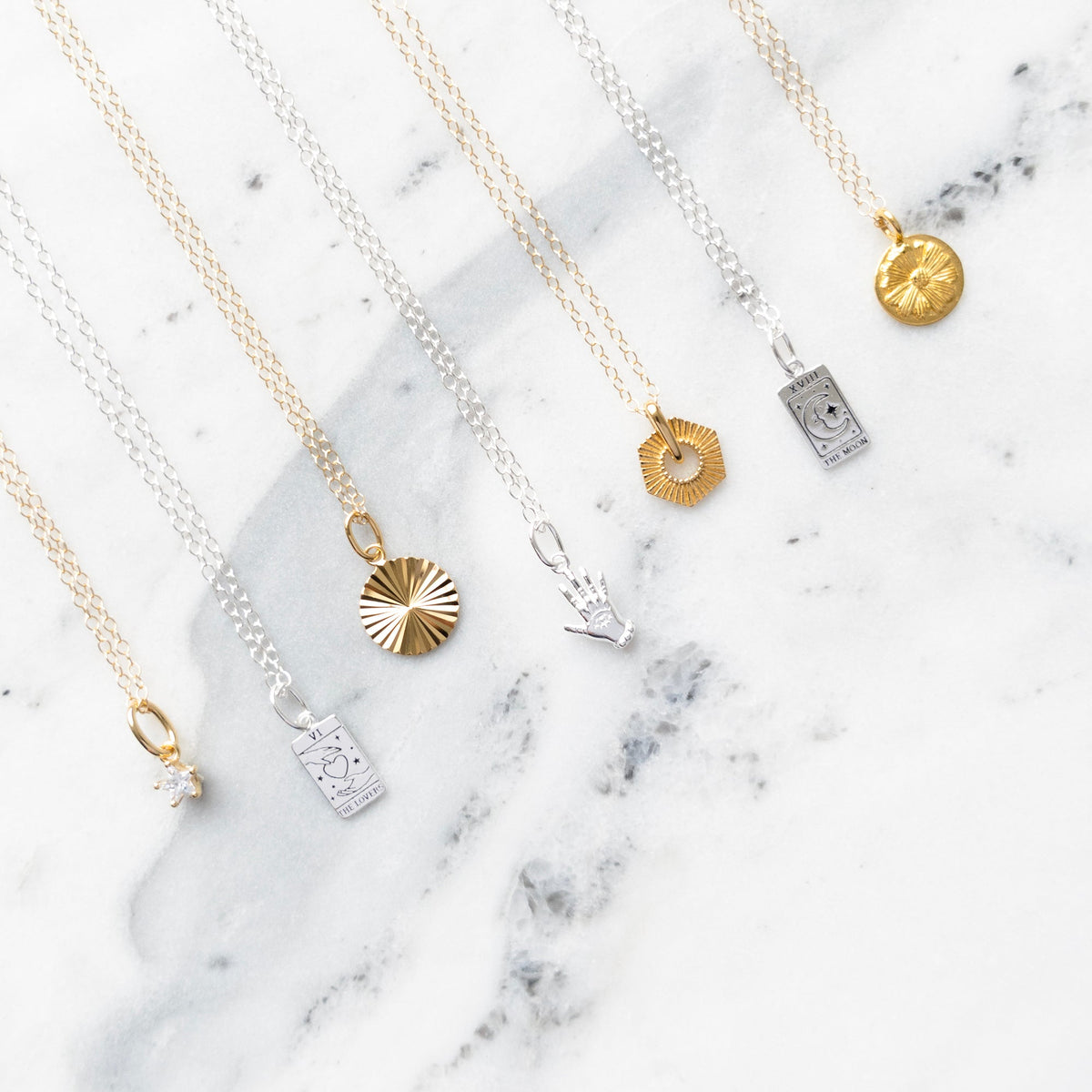




Gold is great. Everyone agrees. It’s shiny, it doesn’t turn your fingers green, and it has been prized since humans decided rocks should mean something.
The problem is solid gold costs solid money. And while that’s fine for heirlooms, engagement rings, or things you plan to pass down alongside your unresolved emotional baggage, it’s not always practical for everyday jewellery.
Which brings us to affordable gold alternatives. Some are excellent. Some are oversold. Some are one shower away from buyer’s remorse.
Let’s break them down.
Gold Plated Jewellery
What Is Gold Plated Jewellery
Gold plated jewellery is made by electroplating a very thin layer of gold onto a base metal—usually brass or copper, sometimes steel. The key word is thin. We’re talking microns. Sometimes less than half a micron. That’s not “gold jewellery”; that’s a gold suggestion.
To put that into perspective: imagine rubbing gold leaf over a pebble and then calling it “treasure.” Shiny, yes. But nobody is believing that's worth anything.
There’s also no universal minimum thickness required to call something “gold plated,” which means the label can cover everything from a detectable coating to a layer so thin it’s practically theoretical. And yes, both get sold under the same name.
Why People Buy It
People buy gold plated jewellery because it’s cheap. Cheap jewellery lets brands pump out new styles at an alarming rate, while shoppers get something shiny that looks like gold—at least for the first few wears.
It photographs well, scratches the “gold jewellery” itch, and feels like a good deal in the moment. Then the gold wears off, the base metal shows up, skin starts turning green, and the illusion collapses.
Gold plated jewellery isn’t designed to last. It’s designed to be made fast, look good on camera, and quickly disappear once the trend moves on.
The Problem With It
Gold plated jewellery is essentially disposable by design.
The gold layer wears off, quickly. Daily friction, skin oils, sweat, perfume, water, oxygen—basically existing as a human being—will strip that ultra-thin gold coating away. Once it’s gone, the base metal underneath is exposed.
That’s when things really go downhill. Brass or copper tarnishes, discolours, and turns skin green. It can also cause irritation, especially for anyone with even mildly sensitive skin. And once this happens, that’s it. You can’t polish gold plating back into existence. You can’t repair it. You can’t extend its (very short) lifespan.
Gold plated jewellery isn’t made to age or improve over time. It’s made to be worn briefly, look convincing while it lasts, and then be replaced.
The Verdict
Fine if you only need jewellery to survive a trend cycle, but a terrible choice for daily wear. Gold plated jewellery is designed to be replaced, not repaired, which is exactly why it falls apart after just a few wears.
If you want jewellery that ages well, stands up to everyday wear, or can be fixed instead of binned, this isn’t it. Gold plated jewellery isn’t built to last; it’s built to keep you buying replacements.
Gold-Toned Jewellery
What Is Gold-Toned Jewellery
“Gold-toned” usually means there’s no actual gold involved at all. The colour comes from coatings, paints, alloys, or finishes like PVD or ion plating. Underneath all that is typically stainless steel, a metal that is genuinely tough, corrosion-resistant, and slow to rust.
Stainless steel itself is durable. The gold colour sitting on top of it is not. Brands love to call gold-toned jewellery “waterproof,” which is a bold little white lie. The steel underneath might survive a dunking. The gold look won’t. Those are two very different things pretending to be the same.
Why People Buy It
People buy gold-toned jewellery because it’s cheap, shiny, and convincingly gold-looking at first glance. Add stainless steel into the mix and it feels like a smarter, more durable choice than basic gold plating.
That stainless steel reputation does a lot of heavy lifting. It gives the impression that the whole piece is built to last, especially when paired with words like “waterproof” or “tarnish-resistant.” The logic sounds reasonable. Steel doesn’t rust, therefore this gold necklace will survive daily life.
Unfortunately, the logic falls apart the moment the coating starts doing what coatings always do.
The Problem With It
Gold-toned jewellery looks durable, but only the stainless steel underneath actually is. The gold colour is just a surface finish, and surface finishes wear. Friction, sweat, showers, handwashing, bag straps, coat collars—normal, boring, everyday life—all start eroding it far sooner than most people expect.
Once that finish fades or rubs through, there’s no comeback tour. You can’t polish it back, you can’t repair it, and most jewellers won’t touch it. The gold colour isn’t structural, it’s decorative. When it goes, it goes.
To make things more annoying, gold-toned jewellery often costs more than basic gold plating while delivering a similar lifespan. Yes, higher-quality PVD coatings can last longer, but they’re still coatings. They wear gradually, unevenly, and permanently.
The Verdict
Gold-toned jewellery is fine for trends, experiments, and low-commitment pieces you don’t plan on keeping forever. It looks good, photographs well, and does a decent impression of gold—if only briefly.
What it isn’t is long-term jewellery. The stainless steel underneath may last, but the gold finish won’t, no matter how confidently it’s marketed. If you’re buying it expecting durability, you’re paying for the illusion of longevity, not the real thing.

Gold Vermeil
What Is Gold Vermeil
Gold vermeil is a class above your average gold plating. It’s a thick layer of gold—at least 2.5 microns—fused over sterling silver (925). That thickness matters. It’s vastly more substantial than typical plated jewellery, which often uses mystery metals and coatings so thin they might as well not be there.
Think of it as “premium plating.” The gold layer is thick enough to handle regular wear better than standard plating, but it’s still a surface finish—a finish that looks and feels convincingly gold, without the solid-gold price tag.
Why People Love It
Vermeil jewellery hits the sweet spot between affordable luxury and practical wearability. It’s thick, shiny, and substantial—none of that flimsy, costume-jewellery look.
Because it’s made with sterling silver and real gold, it’s kinder to skin, resists tarnish better, and spares fingers from turning green. The gold layer on top gives you the look and feel of something precious—without the price tag that makes you wince. While that solid silver core allows for finer detail in some designs.
The Trade-Offs
Vermeil is upgraded plating, not solid gold. That shiny layer will wear over time—friction, sweat, showers, and everyday life all chip away at it. Once the gold thins, the sterling silver underneath can start to oxidise if it isn’t looked after.
It also demands a bit more TLC than gold-filled pieces. Harsh chemicals—cleaning products, perfumes, sunscreen, body sprays—are its nemesis. Soaking it or leaving it wet speeds up wear. Mindful storage and gentle care will keep it looking great for years; neglect it, and it will age faster than gold-filled jewellery.
The Verdict
Vermeil is a reliable mid-ground: luxurious enough to feel special, practical enough to wear often. It’s ideal for statement pieces, earrings, pendants, and jewellery pieces that prioritise design and detail over constant wear.
We use vermeil where it allows for beautiful, detailed designs without compromising quality, giving you jewellery that’s both eye-catching and long-lasting when treated well.
Gold-Fill
What Is Gold Filled Jewellery
Gold filled jewellery is made by mechanically bonding a thick layer of solid gold—usually 10k to 14k—onto a base metal using heat and pressure. This is not plating. There’s no thin, paint-on illusion. The gold is physically fused to the surface, creating a substantial outer layer that behaves like gold because it is gold.
In regulated markets like the UK, gold filled jewellery must contain at least 5% gold by total weight. That’s not decorative. That’s structural. It’s the difference between something that looks gold for a while and something that actually functions like gold in everyday wear.
Reputable brands—like us!—use sterling silver as the base metal, which adds strength, value, and repairability. Less reputable ones use brass and hope you don’t ask. Always check. The base metal matters.
Why People Love It
Gold-filled jewellery delivers the gold experience without the gold-sized bill, making everyday luxury actually affordable.
The thick gold layer makes all the difference. It resists tarnishing, doesn’t flake or peel, and is safe for sensitive skin. Unlike plated or gold-toned jewellery, gold filled pieces can be polished, repaired, and even resized. That alone puts it in a completely different category.
It also ages well. You would need to wear a gold filled piece hard, consistently, and over a long time to expose the base metal. And even then, most issues are fixable.
The Trade-Offs
Gold filled jewellery costs more than plated or gold-toned pieces, and that’s not a downside—it’s the point. You’re paying for material, not marketing.
Some ultra-detailed designs aren’t suitable for gold filled construction, simply because the gold layer is thicker and more substantial. And while gold filled jewellery is tough, it isn’t indestructible. Harsh chemicals, constant exposure to perfumes or cleaning products, and careless storage will still take their toll over time.
Treat it like jewellery, not hardware. Store it properly, keep it dry, and give it the same basic respect you’d give solid gold. Do that, and it will reward you for it.
The Verdict
Gold-filled jewellery is one of the best affordable alternatives to solid gold, full stop. It’s perfect for everyday pieces that are meant to be worn, lived in, and loved—not locked away in a velvet box for “special occasions.”
With sensible care, gold filled jewellery can easily last 10 to 30 years, even with regular wear. That durability—and the fact you don’t have to baby it—is exactly why we choose gold-filled for our jewellery.
Not disposable. Not precious to the point of paralysis. Just genuinely good jewellery.
Quick Comparison (Because Everyone Skims)
| TYPE | REAL GOLD? | BASE METAL | DURABILITY | SKIN-FRIENDLY | EVERYDAY WEAR |
| Gold Plated | Barely (very very thin) | Brass/Copper | ❌ | ❌ | ❌ |
| Gold-Toned | No | Steel/Base metal | ⚠️ | ⚠️ | ⚠️ |
| Gold Vermeil | Yes (thick plating) | Sterling Silver (but check first) | ✅ | ✅ | ✅ |
| Gold Filled | Yes (thick bonded layer) | Brass/Sterling Silver (always check!) | ✅ | ✅ | ✅ |
About “Waterproof” Jewellery
Let’s get one thing straight: no gold coating is actually waterproof. Solid gold holds up. Gold filled is highly resilient. Plated and gold-toned jewellery wear faster when exposed to water. That’s always been the truth, and it hasn’t changed just because a brand decided to slap “waterproof” on the label.
If a jewellery piece relies on a surface finish to look gold, water will always win in the long run. Plating, PVD, ion coating—different methods, same outcome. “Waterproof jewellery” is mostly marketing spin used to make cheap jewellery sound tougher than it is.
Want your jewellery to last? Go gold filled or well-made vermeil, give them a little respect, and they’ll reward you with years of wear. Treat them right, and they’ll outlast trends—and your patience with cheap jewellery.
So What’s Actually Worth Buying?
If you want jewellery that looks like gold, wears like gold, and doesn’t demand a solid-gold budget (or a maxed out credit card), the hierarchy is pretty clear.
Gold-filled jewellery is the standout. It’s the closest thing to solid gold without the price tag, built for daily wear, and capable of lasting years—often decades—when cared for properly. It behaves like gold because the surface is gold, not a coating pretending to be something it isn’t.
Gold vermeil comes in as a strong second. It offers real gold, a precious metal base, and a more accessible price point, making it a great option for statement pieces, earrings, and designs where detail matters. It just asks for a little more care and realistic expectations around lifespan.
Gold plated and gold-toned jewellery are rarely ever a good choice because they’re so temporary. They work for trends, experiments, and low-commitment pieces. Where they fall apart is when they’re marketed as long-lasting or everyday jewellery. They’re not designed to be long-lasting or to be worn every day—no matter how convincing the marketing sounds.
Choose based on how you actually live and wear your jewellery, not how long you want it to look good in a product photo.